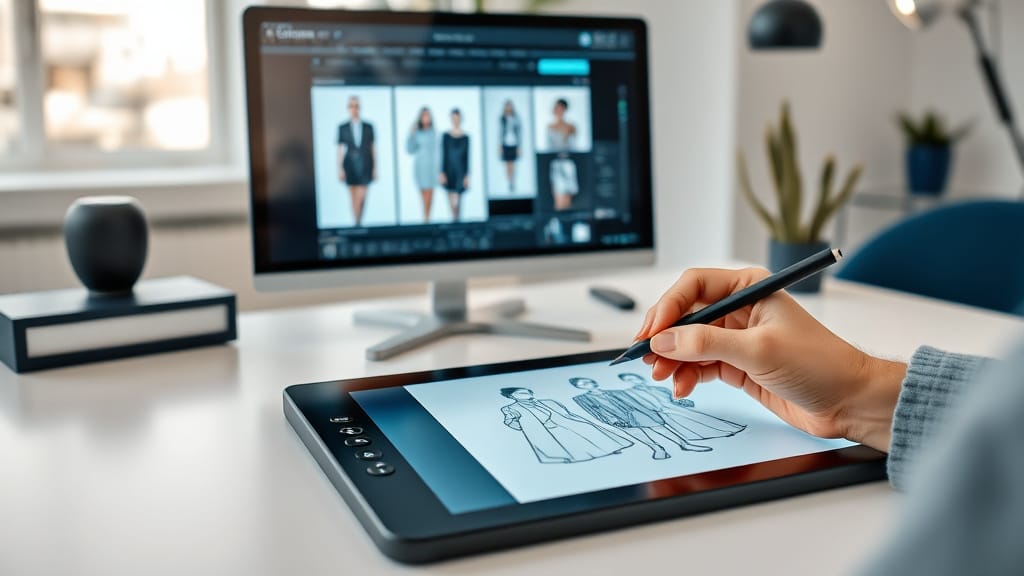
The AI hype in product photo editing is deafening. Every week, another tool promises to replace human editors entirely — background removal in seconds, retouching at the click of a button, entire catalogues processed overnight without a single person involved.
Some of those promises are real. Some are wildly overstated. And most miss the point entirely.
At Pixel by Hand, we have spent over a decade editing product images for eCommerce businesses — from small independent brands to enterprise retailers with catalogues of tens of thousands of SKUs. We have seen every trend, every shortcut, and every "revolution" that was supposed to change everything.
Here is what we have actually learned: AI is a genuinely powerful tool for product image editing. But it is a tool, not a replacement. The best results come from combining AI efficiency with human expertise — and that is exactly what we do.
This is the story of how our AI assisted photo editing service works, why we built it this way, and what it means for our clients.
Table of Contents
- Why We Adopted AI Tools (And Why It Took Us a While)
- What AI Is Actually Good At in Product Photo Editing
- What AI Still Cannot Do Well
- The Pixel by Hand Workflow: AI + Human, Step by Step
- What This Means for You
- Three Real Scenarios: How the Split Works in Practice
- Why "AI-Only" Editing Services Are a Race to the Bottom
- Our Commitment: Better Technology, Same Standards
- FAQ
Why We Adopted AI Tools (And Why It Took Us a While)
We will be honest: we were sceptical at first. When AI-powered background removal tools started appearing in 2020 and 2021, the output was inconsistent. Edges were rough. Fine details — hair, lace, transparent materials — were handled badly. For a company built on quality, adopting tools that produced inferior results was not an option.
But AI improved. Rapidly. By 2023, the best tools could handle straightforward background detection with remarkable accuracy. Batch processing became genuinely useful. Auto-cropping algorithms could follow marketplace specifications without manual input.
We started testing internally. Not as a replacement for our editors, but as a way to eliminate the most repetitive, mechanical parts of the workflow — the tasks that consumed time but did not require creative judgement.
The results were clear: on suitable images, AI preprocessing could cut the time our editors spent on mechanical tasks by 40-60%. That meant our editors could focus entirely on the work that actually requires skill — complex retouching, colour accuracy, brand-specific adjustments, and quality control.
We did not adopt AI to reduce headcount. We adopted it to make our team more effective.
What AI Is Actually Good At in Product Photo Editing
Credit where it is due — modern AI tools handle certain tasks extremely well:
-
Initial background detection — For products shot on clean, contrasting backgrounds, AI can identify and separate the subject with high accuracy. This gives our editors a strong starting point rather than building from scratch.
-
Auto-cropping to specifications — Every marketplace has different image requirements. Amazon wants pure white backgrounds with specific margins. Shopify templates require particular aspect ratios. AI can apply these rules consistently across hundreds of images without error.
-
Batch resizing and format conversion — When a client needs the same image in eight different sizes for web, mobile, marketplace, and social media, AI handles this instantly. No human judgement required.
-
Basic colour normalisation — AI can detect and correct obvious white balance issues, ensuring a baseline level of colour consistency across a batch of images shot under slightly varying conditions.
-
Dust and spot detection — Simple blemish detection on clean surfaces is handled well by current tools, flagging obvious imperfections for review or automatic correction.
These are genuine strengths. On a batch of simple products shot on white backgrounds, AI preprocessing can handle a significant portion of the mechanical work — and it does so faster and more consistently than a human performing the same repetitive steps.
What AI Still Cannot Do Well
Here is where the conversation gets more nuanced — and where most "AI-only" services fall short.
Complex clipping paths. When a product has intricate edges — think lace, mesh, fur, feathers, or jewellery with fine chains — AI struggles. It either clips too aggressively (losing detail) or too loosely (leaving artefacts). A skilled editor with a pen tool produces cleaner, more accurate results on complex subjects every time.
Ghost mannequin compositing. The invisible mannequin effect requires assembling multiple exposures — front, back, interior labels, neck seams — into a single seamless composite. This is a multi-step creative process that AI cannot reliably automate. Each garment has unique characteristics that require human judgement about how the pieces fit together.
Accurate colour matching across variants. When a product comes in twelve colourways and the photography conditions vary slightly between shots, AI colour correction often introduces inconsistencies rather than eliminating them. A human editor who understands colour theory can match variants precisely to the actual product colours — which is critical for reducing return rates.
Creative retouching. Fabric wrinkle removal that looks natural, shadow creation that matches the lighting environment, skin retouching on model shots that maintains realism — these require aesthetic judgement that current AI simply does not possess.
Brand-specific adjustments. Every client has a unique style template. Some want warm, inviting tones. Others want clinical, high-contrast product shots. AI applies the same treatment to everything. Human editors understand your brand and adapt accordingly.
Context and common sense. AI does not know that the label is upside down, that the product is the wrong way round, or that a styling element has shifted between shots. A human editor catches these issues immediately.
The Pixel by Hand Workflow: AI + Human, Step by Step
Our workflow is designed so that AI handles the mechanical preparation and humans handle everything that requires skill, judgement, and quality assurance. Here is how it works:
| Stage | Who | What Happens |
|---|---|---|
| 1. Image intake | System | Images uploaded via our secure platform, job brief and style template attached |
| 2. AI preprocessing | AI | Background detection, auto-crop to specs, batch resize, basic colour normalisation, spot detection |
| 3. AI output review | Human editor | Checks AI preprocessing quality, flags images that need full manual treatment |
| 4. Expert editing | Human editor | Complex clipping paths, ghost mannequin assembly, colour matching, creative retouching, shadow creation, brand-specific adjustments |
| 5. Quality control | Human QC specialist | Every single image reviewed against the client's style template before delivery |
| 6. Delivery | System | Final images delivered via secure platform in all required formats and sizes |
The critical point: no image leaves our studio without human review. AI is a preparation tool, not a decision-maker. Our editors and QC specialists have the final say on every image we deliver.
This is not a compromise. It is the most effective workflow we have found in over ten years of continuous refinement.
Want to see this workflow in action? Send us your images for a free sample edit — no commitment, no card required. We will show you exactly how our AI + human approach delivers results.
What This Means for You
Our hybrid approach creates three tangible benefits for clients:
Faster Turnaround
AI preprocessing eliminates hours of mechanical work from every batch. Our editors start with a cleaner foundation, which means they reach the creative, quality-critical stages faster. For high-volume clients, this can reduce overall turnaround time significantly — particularly on simpler product categories where AI handles a larger share of the preparation work.
Consistent Quality at Scale
One of the hardest problems in product image editing is maintaining consistency across a large catalogue. When human editors process thousands of images manually from scratch, small variations inevitably creep in. AI preprocessing creates a uniform starting point — same crop, same margins, same baseline colour treatment — which our editors then refine. The result is noticeably more consistent output, even across very large batches.
No Quality Compromise
This is the most important point. We have not adopted AI to cut corners. We have adopted it to give our editors more time to focus on the work that matters — the retouching, the colour accuracy, the brand alignment, the details that separate professional product imagery from "good enough."
Every image still receives human attention. Every image is still reviewed against your style template. The quality standard has not changed. The efficiency has.
Three Real Scenarios: How the Split Works in Practice
The balance between AI and human work varies depending on the complexity of the product and the editing requirements. Here are three typical scenarios:
| Scenario | Product Type | AI Contribution | Human Contribution | Result |
|---|---|---|---|---|
| Simple product on white | Packaged goods, electronics, homeware | ~80% (background removal, crop, resize, colour normalisation) | ~20% (QC, minor retouching, final colour check) | Fastest turnaround, most cost-efficient |
| Fashion on mannequin | Apparel, accessories | ~30% (initial background detection, crop, resize) | ~70% (ghost mannequin assembly, wrinkle removal, colour matching, shadow creation, QC) | Same quality standard, moderately faster |
| Jewellery close-up | Rings, necklaces, watches, gemstones | ~10% (resize, format conversion) | ~90% (precision clipping, reflection management, metal/gem retouching, colour accuracy, QC) | Quality that AI alone simply cannot achieve |
Scenario 1: Simple Product on White Background
A homeware brand sends 500 product images — mugs, candles, storage boxes — all photographed on a light grey sweep. The products have clean, defined edges with no transparency or complex textures.
AI handles the heavy lifting: background removal to pure white, cropping to the client's marketplace specifications, resizing for web and mobile, and basic colour normalisation across the batch. Our editors then review the output, make minor adjustments where needed, and verify that every image matches the style template. The entire batch moves through our studio significantly faster than it would with a fully manual workflow.
Scenario 2: Fashion on Ghost Mannequin
A clothing brand sends 200 garments — shirts, dresses, jackets — photographed on mannequins from multiple angles. They need the invisible mannequin effect with natural shadow on white.
AI can handle the initial background detection and prepare the crops, but the core work is human. Each garment requires careful compositing of multiple exposures, precise edge work around collars and cuffs, wrinkle reduction that looks natural rather than plastic, and shadow creation that gives the garment dimension. Colour matching across variants (the same shirt in eight colours) requires a human eye comparing against physical swatches or reference images.
AI saves time on the preparation stage, but the skill-intensive work — which is most of the job — remains firmly with our editors.
Scenario 3: Jewellery Close-Up
A jewellery brand sends 100 hero images — diamond rings, gold chains, gemstone pendants — all requiring close-up detail shots for their website.
This is where AI contributes the least and human skill matters the most. Jewellery editing demands precision clipping around tiny, intricate forms. Reflections on metal surfaces need careful management. Gemstone colours must be enhanced while remaining true to life. The play of light across a diamond facet cannot be automated — it requires an editor who understands how light behaves and how to bring out the product's best qualities.
AI handles the mechanical output — generating the final files in the correct sizes and formats — but the creative work is almost entirely human.
Curious where your products fall? Start your free trial — send us a sample batch and we will show you exactly how our process handles your specific product category. Free, no obligation.
Why "AI-Only" Editing Services Are a Race to the Bottom
A growing number of services now offer fully automated product image editing. Upload your photos, let the algorithm process them, download the results. No human involvement. Extremely low prices.
We understand the appeal. Speed and cost matter. But here is the problem: these services compete solely on price and speed — and there is always someone willing to go cheaper and faster by cutting more corners.
The consequences show up in the details:
- Inconsistent edge quality. AI handles 90% of edges well and butchers the other 10%. Those are the images your customers notice.
- Colour drift. Without human calibration, automated colour correction can shift product colours away from reality — increasing return rates and eroding trust.
- No brand understanding. Automated services apply generic treatments. Your images look like everyone else's images because they are processed by the same algorithm.
- No error catching. When something goes wrong — a misidentified background, a clipping artefact, a product photographed incorrectly — there is no human in the loop to catch it before it reaches your store.
- No accountability. When quality issues arise, there is no editor to discuss them with. You get what the algorithm gives you.
For low-stakes, high-volume, simple imagery — social media posts, temporary listings, internal use — fully automated tools can be adequate. But for your primary product imagery — the images that represent your brand and drive purchasing decisions — "adequate" is a dangerous standard.
The race to the bottom in AI-only editing ultimately produces a commodity service where every brand's images look the same, quality is unpredictable, and the only differentiator is who charges less. That is not a market we want to compete in, and it is not a service we think you should settle for.
Our Commitment: Better Technology, Same Standards
We will continue to adopt AI tools wherever they genuinely improve our workflow. We are actively evaluating advances in:
- Smarter background detection that handles increasingly complex products
- AI-assisted colour matching that gives our editors a better starting point for variant matching
- Automated quality scoring that helps our QC team prioritise their review time
- Predictive workflow routing that automatically assigns images to the right processing path based on complexity
But our fundamental standard does not change: every image is reviewed by a human before it reaches you. That commitment is non-negotiable, regardless of how capable the technology becomes.
We have been editing product images for over ten years. We have worked with more than 380 clients across every product category imaginable. We know what quality looks like, we know what sells products, and we know that the best results come from combining the right tools with the right people.
AI makes our team faster. Our team makes AI better. That is the model that works.
Ready to experience the difference? Get started with a free trial — send us your product images and we will return professionally edited samples showing exactly what our AI + human workflow delivers. No cost, no commitment, no card required.
FAQ
What does "AI assisted photo editing" actually mean at Pixel by Hand?
It means we use AI tools for the mechanical, repetitive stages of image editing — background detection, auto-cropping, batch resizing, and basic colour normalisation. Every image then passes to an experienced human editor for quality-critical work (retouching, colour matching, brand adjustments) and a final human quality control review. AI prepares; humans perfect.
Will AI make my images look generic or automated?
No. The AI stage handles technical preparation only — the equivalent of setting up a canvas. All creative and brand-specific work is done by our human editors, who follow your unique style template. Your images will look like your brand, not like a default algorithm output.
Is this more expensive than a fully automated AI service?
Our pricing reflects the fact that every image receives human attention and quality control. Fully automated services are cheaper, but the quality gap is significant — particularly for complex products, fashion, and jewellery. Many of our clients have come to us after trying automated services and finding that the output was not good enough for their primary product imagery. You get what you pay for.
How much faster is your AI-assisted workflow compared to fully manual editing?
It depends on the product complexity. For simple products on white backgrounds, AI preprocessing can reduce overall turnaround time by 30-50%. For complex products like fashion and jewellery, the time saving is smaller because the majority of the work still requires human skill. In all cases, our standard turnaround remains overnight — upload by 6pm, receive by 10am.
Can I see the difference between AI-only and your AI + human results?
Absolutely. Our free trial is designed for exactly this. Send us a batch of your product images and we will return professionally edited samples. You can then compare our output against any automated service to see the quality difference for yourself. Start your free trial here.
Will you eventually move to fully automated, AI-only editing?
No. Our commitment is to adopt technology that improves efficiency without compromising quality. Based on where AI is today — and where it is heading — there are aspects of product image editing that require human judgement, and we believe that will remain true for the foreseeable future. We will always have experienced editors reviewing and perfecting every image we deliver.